
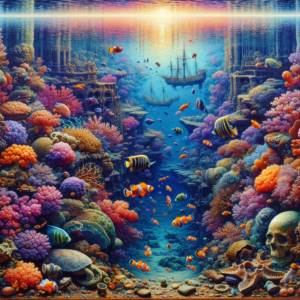
(The History of the Sea: Tales from the Depths of Time)
The sea has always been a source of fascination, mystery, and inspiration for humanity. It covers over 70% of our planet’s surface and holds countless stories, both real and mythical. From ancient civilizations that thrived along its shores to modern explorations that delve into its depths, the history of the sea is rich with tales that span millennia.
Ancient Civilizations and the Sea
From the earliest days of humankind, the sea has played a crucial role in the development of societies. Ancient civilizations such as the Egyptians, Phoenicians, and Greeks navigated its waters for trade, exploration, and conquest. The Mediterranean Sea became a bustling highway for commerce, connecting disparate cultures and fostering the exchange of ideas, goods, and technologies.
The Phoenicians: Masters of Navigation
The Phoenicians, known for their advanced seafaring skills, were among the first to explore the open waters of the Mediterranean. Their innovation in shipbuilding and navigation allowed them to establish trade routes that spanned from the shores of the Levant to the far reaches of the British Isles. Legends of their voyages echo through history, showcasing their courage and expertise in sailing.
Myth and Legend: The Sea in Folklore
The sea has also inspired countless myths and legends. From the sirens that lured sailors to their doom to the mighty Poseidon, god of the sea, these stories reflect humanity’s relationship with the ocean—both reverent and fearful. Cultures around the world have woven tales of sea monsters, mermaids, and lost civilizations beneath the waves, reminding us of the ocean’s mysterious nature.
Atlantis: The Lost City
Perhaps the most famous tale is that of Atlantis, a legendary island first mentioned by Plato. According to the myth, Atlantis was a powerful and advanced civilization that sank into the ocean in a single day and night of misfortune. This story has captivated imaginations for centuries, leading explorers and archaeologists to search for evidence of this lost world.
Exploration and Discovery
The Age of Exploration in the 15th and 16th centuries marked a significant turning point in our understanding of the sea. Explorers like Christopher Columbus and Ferdinand Magellan ventured into the unknown, driven by a thirst for discovery and the promise of new lands. Their voyages expanded the maps of the world and opened new trade routes, forever changing the course of history.
Modern Oceanography
In the modern era, the study of the sea has evolved into a scientific discipline known as oceanography. Advances in technology have allowed us to explore the ocean’s depths with unprecedented detail. From submersibles that can withstand extreme pressure to satellite imaging that maps ocean currents, our understanding of the sea continues to grow. Today, we recognize the critical role oceans play in regulating climate, sustaining biodiversity, and supporting human life.
The Sea’s Future: Challenges and Conservation
As we look to the future, the challenges facing our oceans are daunting. Climate change, pollution, overfishing, and habitat destruction threaten the delicate balance of marine ecosystems. However, there is also hope. Global movements towards conservation and sustainable practices are gaining momentum, emphasizing the need to protect our oceans for future generations.
A Call to Action
Understanding the history of the sea reminds us of our responsibility to preserve its beauty and resources. As stewards of the ocean, we must advocate for policies that protect marine environments and promote sustainable practices. The tales from the depths of time serve as a testament to the sea’s importance in our past—and its potential to shape our future.
📌 هذا المقال تم إعادة تحريره باستخدام الذكاء الاصطناعي .